Every sermon,brought to light.
Filament turns your church's YouTube channel into a searchable sermon library, with scripture you can jump to and a study guide for every message.
Your sermons are all on YouTube. Finding one is another matter.
You can't search what was said
YouTube searches titles. The sermon on forgiveness from two springs ago is forty minutes into a video called Sunday Service.
Scripture is scattered
Nobody can ask which sermons were preached from Philippians, or where in the video the passage was read.
Sunday ends on Sunday
A message your church worked on all week leaves people with nothing to take into the week after.
From upload to library, without anyone typing
Nothing about your Sunday changes. What happens afterwards does.
You upload to YouTube, as you do now
Filament watches your channel and notices a new video within minutes.
It listens
Every sermon is transcribed, from YouTube's captions where they exist and from the audio where they do not.
It reads
A summary, the themes, the preacher and the series. Every scripture reference, with the moment in the video it was read.
It writes a study guide
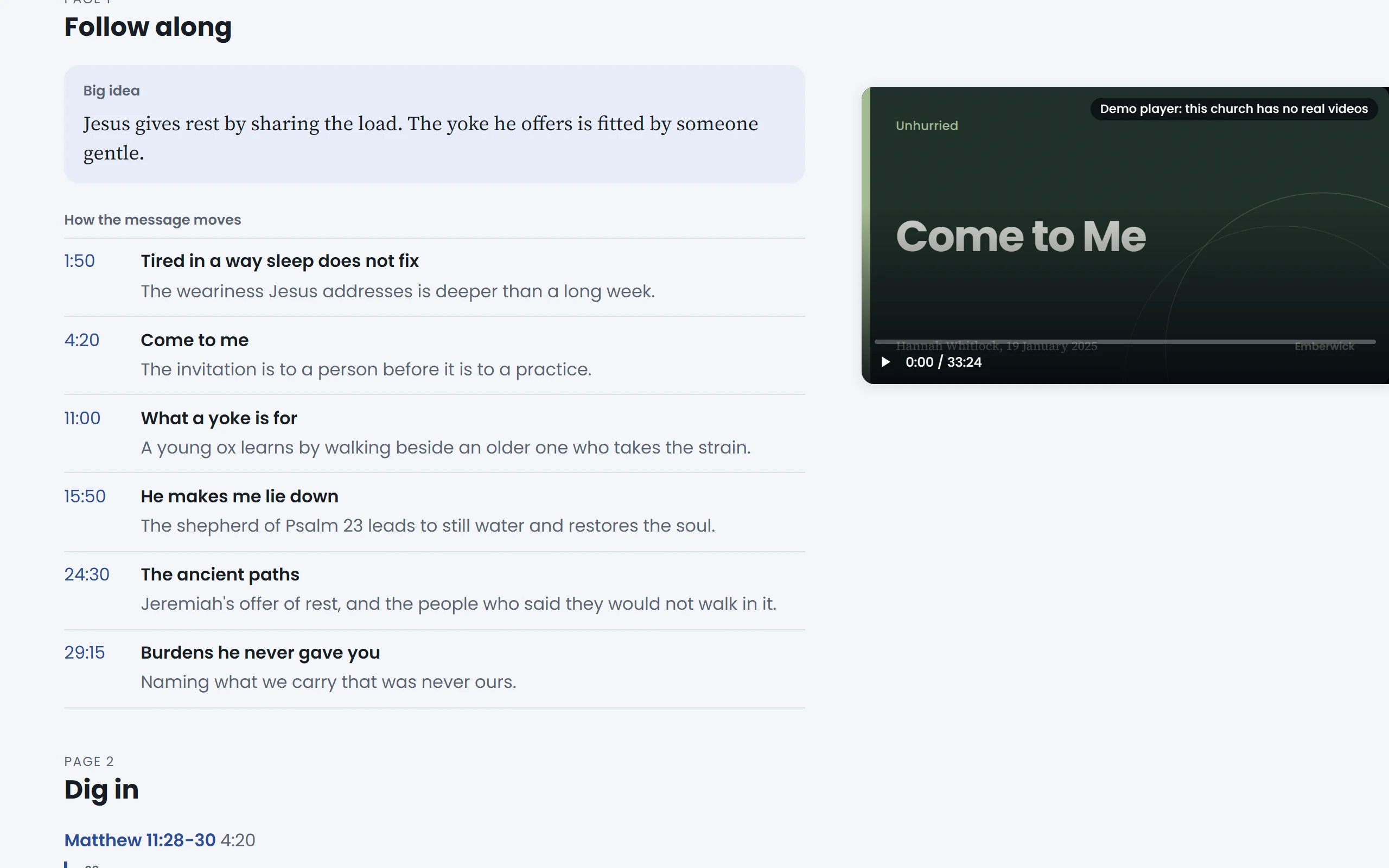
Three pages: follow along, dig in, take it home. The guide waits until someone on your staff approves it.
It publishes
A searchable library at your church's own address. The search runs in the visitor's browser, so it is quick and private.
See it work
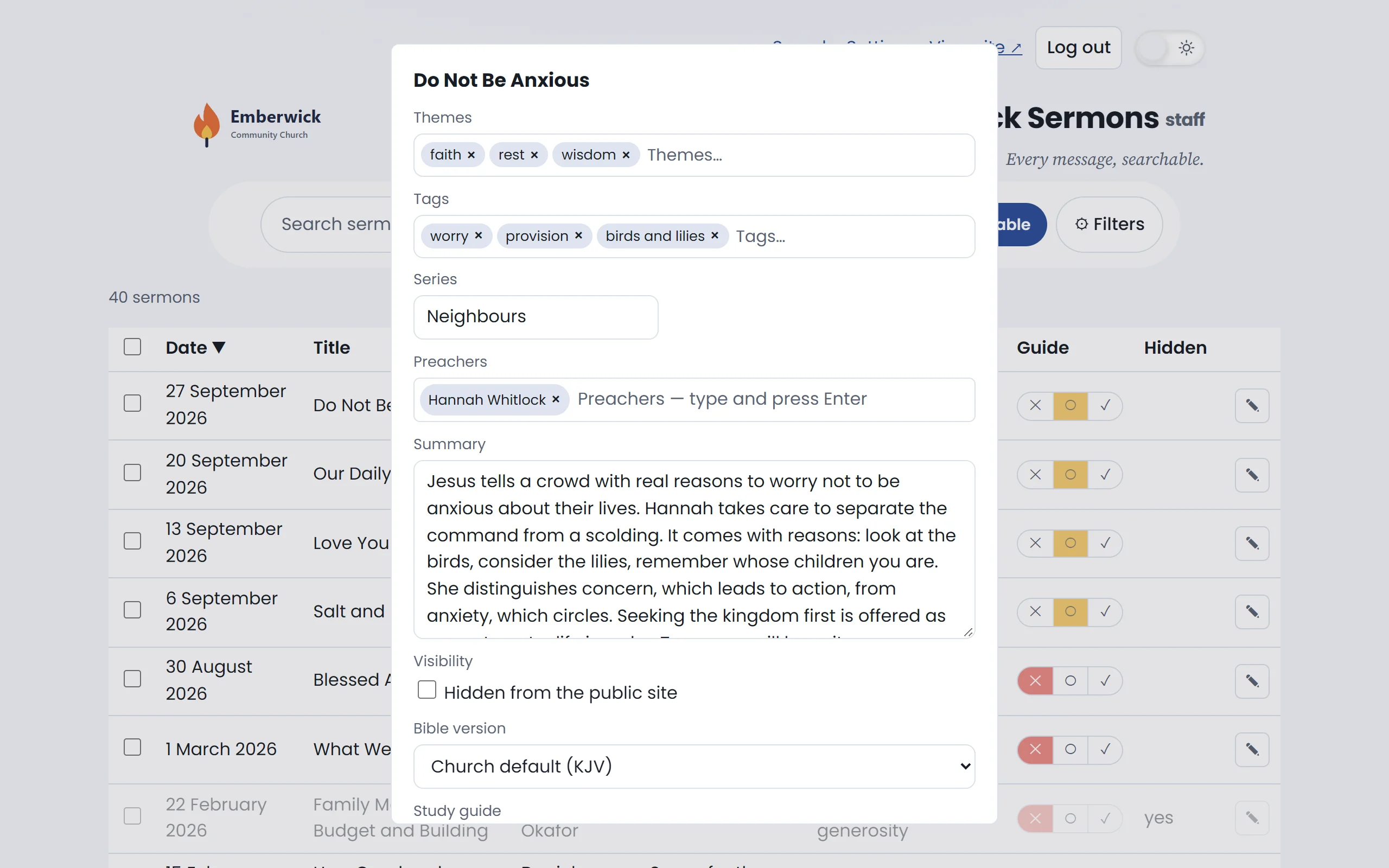
This is the product itself, running on a church we made up. Click where the light is.
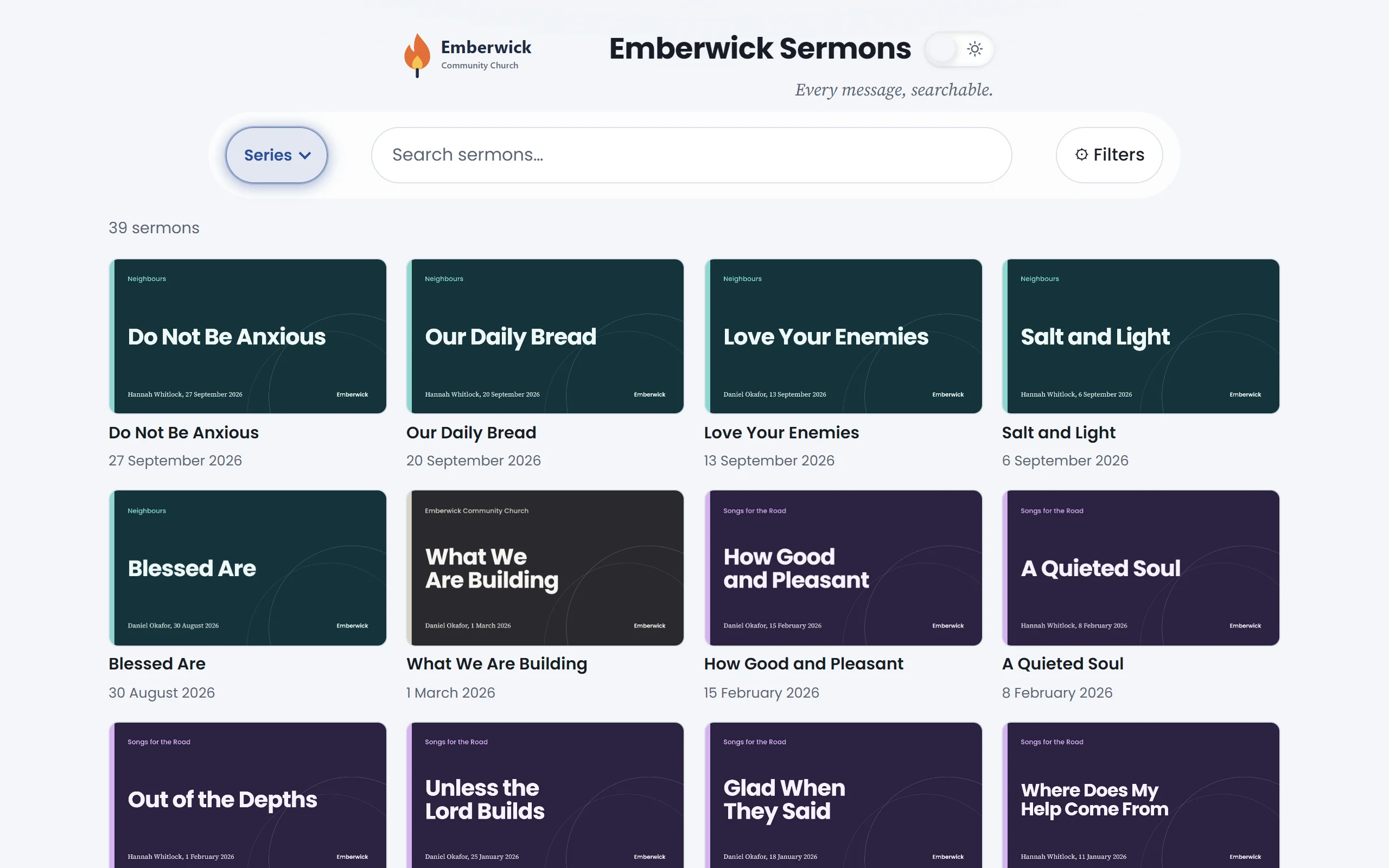
This is your sermon library
Every sermon on the church's YouTube channel is here, newest first. Nobody typed these in: Filament read the channel.
Step 1 of 10. This is your sermon library. Every sermon on the church's YouTube channel is here, newest first. Nobody typed these in: Filament read the channel.
What your church gets
- Your own address
- The library lives at yourchurch.filament.church, or at a domain you already own.
- Staff decide what goes out
- Study guides wait for approval. Edits wait for a publish. Any sermon can be hidden with one tick.
- Your words, kept
- When staff rewrite a summary or change a series, it stays that way. Later runs leave edited fields alone.
- No cookies, no tracking
- The public library is plain files. It sets no cookies and follows nobody around.
- Your own AI key
- Your church brings its own key for the language model, so that cost is yours to see. Transcription is included.
- Backups you can download
- Everything Filament holds for your church can be downloaded from the console, whenever you like.
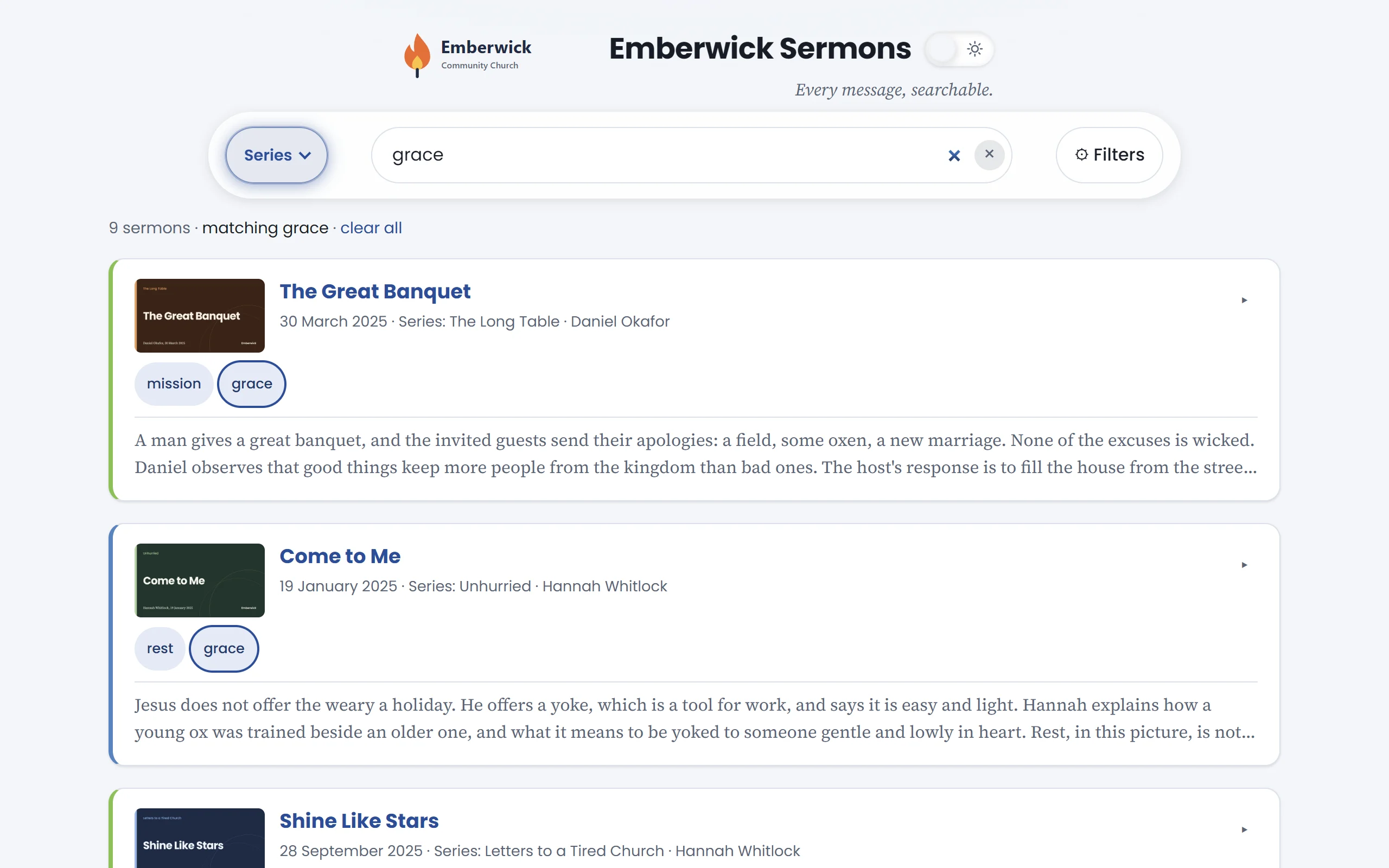
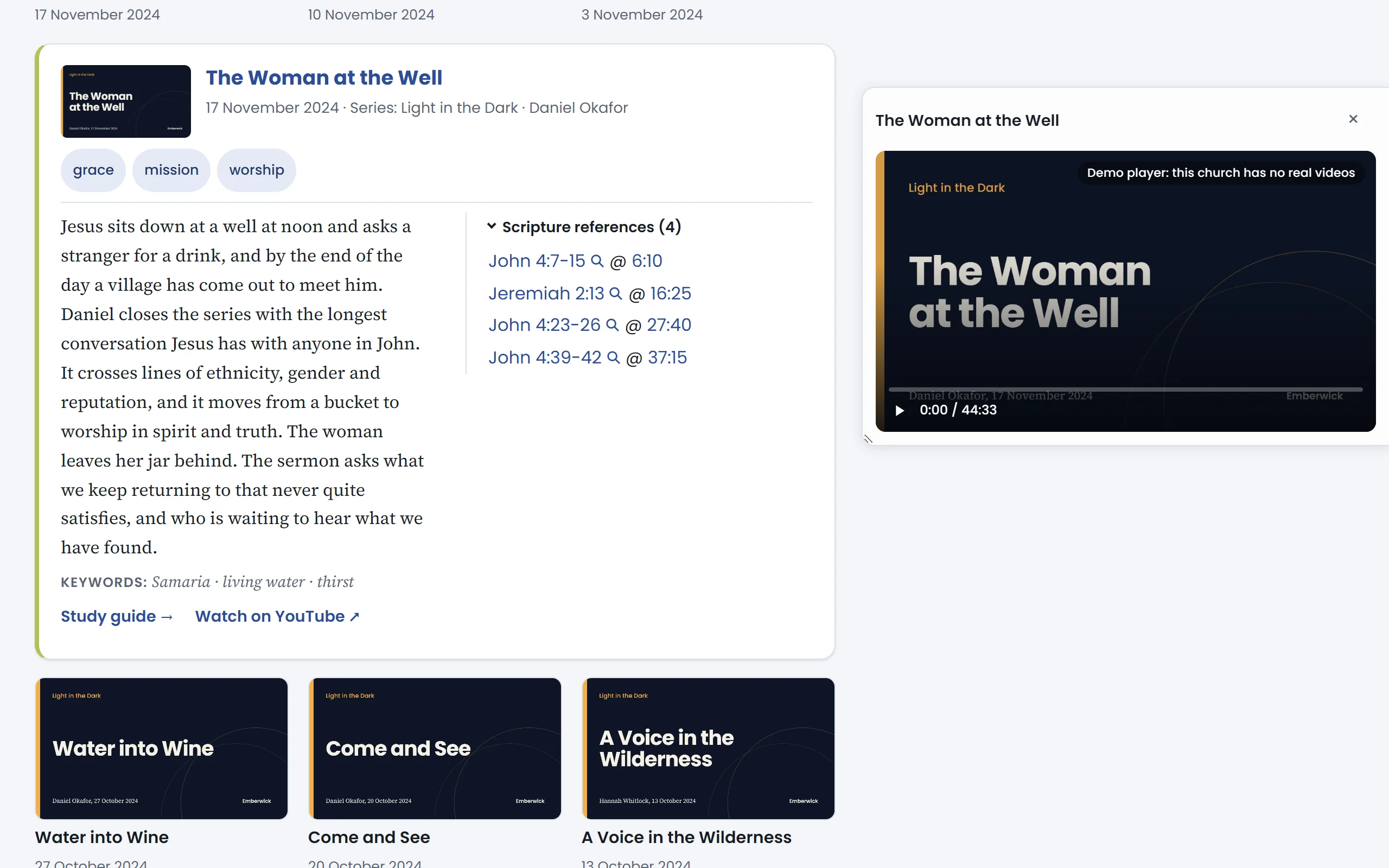
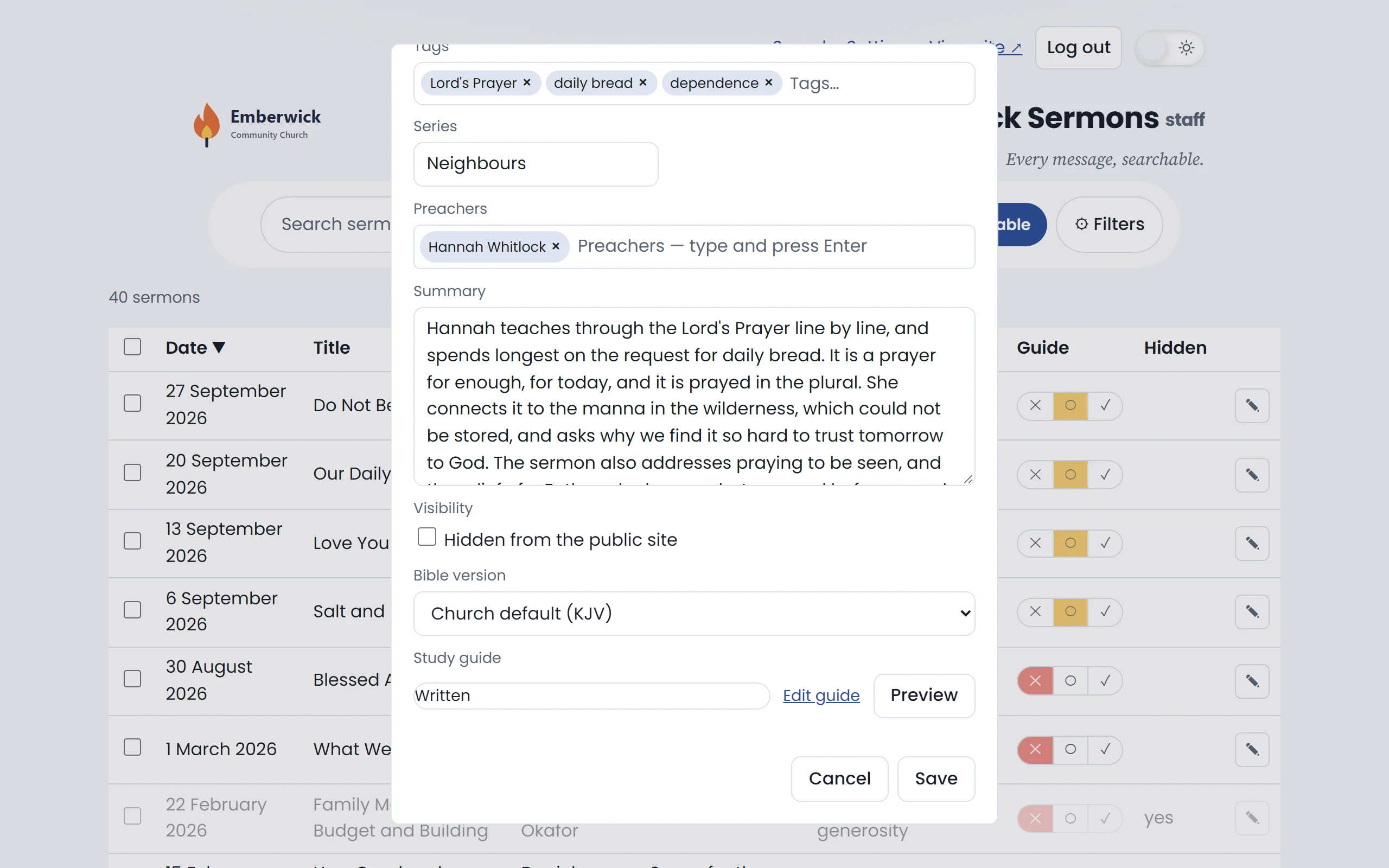
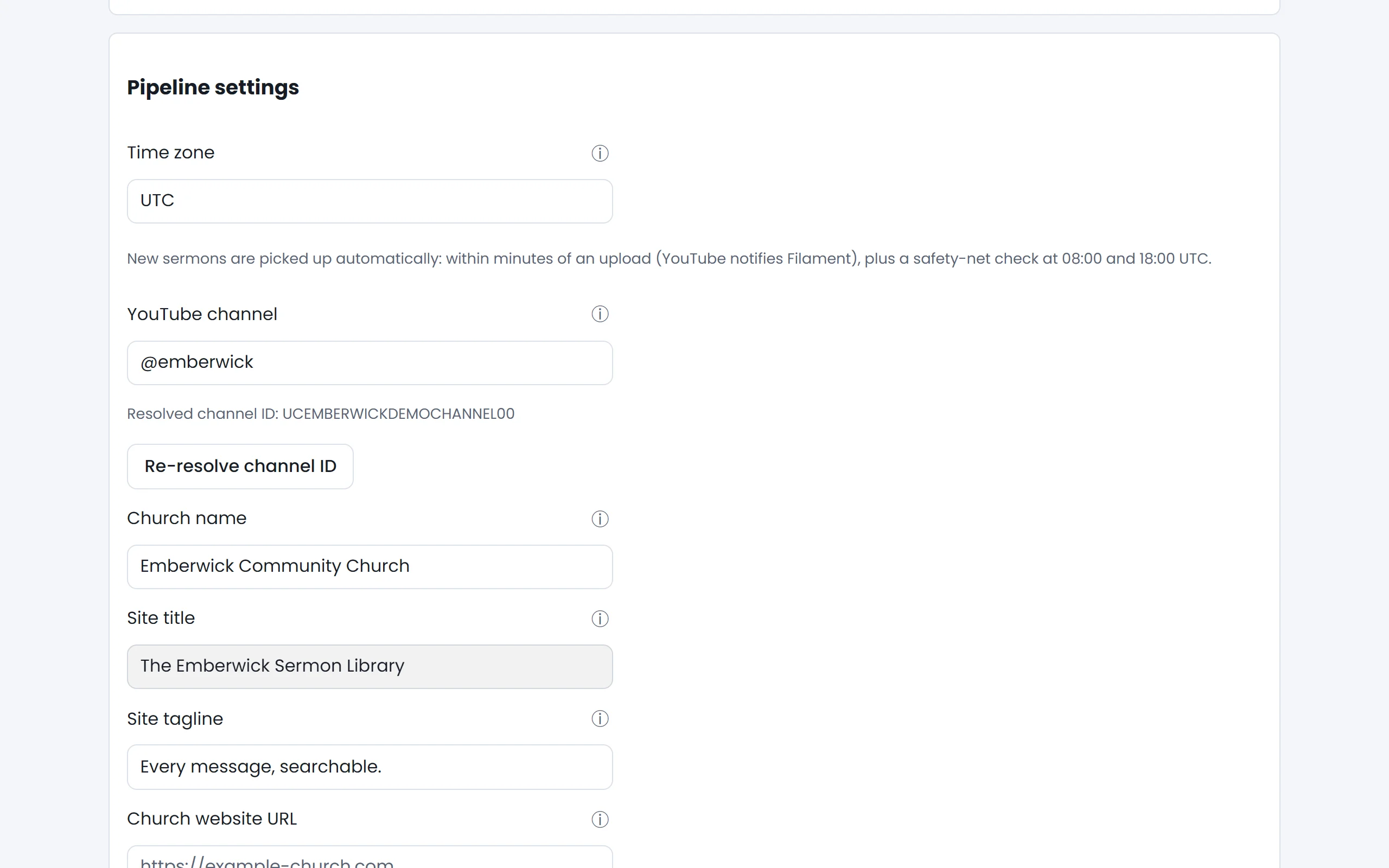
A guide for every step
Each tour is also written out, with a picture for every step, for the people who would rather read. They print cleanly.
Questions churches ask
Do we have to change how we upload?
No. Keep uploading to YouTube the way you do now. Filament is told about a new video within minutes, and checks twice a day in case a notice was missed.
What if a summary gets something wrong?
Staff can edit any summary, theme, preacher or series, hide a sermon, and rewrite or turn down a study guide. Whatever staff have edited is left alone from then on.
Whose content is it?
Your church's. The summaries, guides and edits are yours, and the console lets you download a backup at any time.
What does the AI cost?
Your church uses its own key, with Anthropic or OpenAI, so you see that bill yourself. On the demo call we will go through what a church of your size can expect.
Which Bible translations can we use?
Twelve, among them the ESV, NIV, NKJV, NLT, CSB, NASB and KJV. Passages are shown by Biblia in the translation you choose. Filament never stores the text of scripture.
Can we use our own domain?
Yes. The library starts at yourchurch.filament.church and can be served from a domain you own.
See it on a call
Tell us a little about your church. We'll reply within one working day to arrange a time, and show you Filament with your questions in hand.